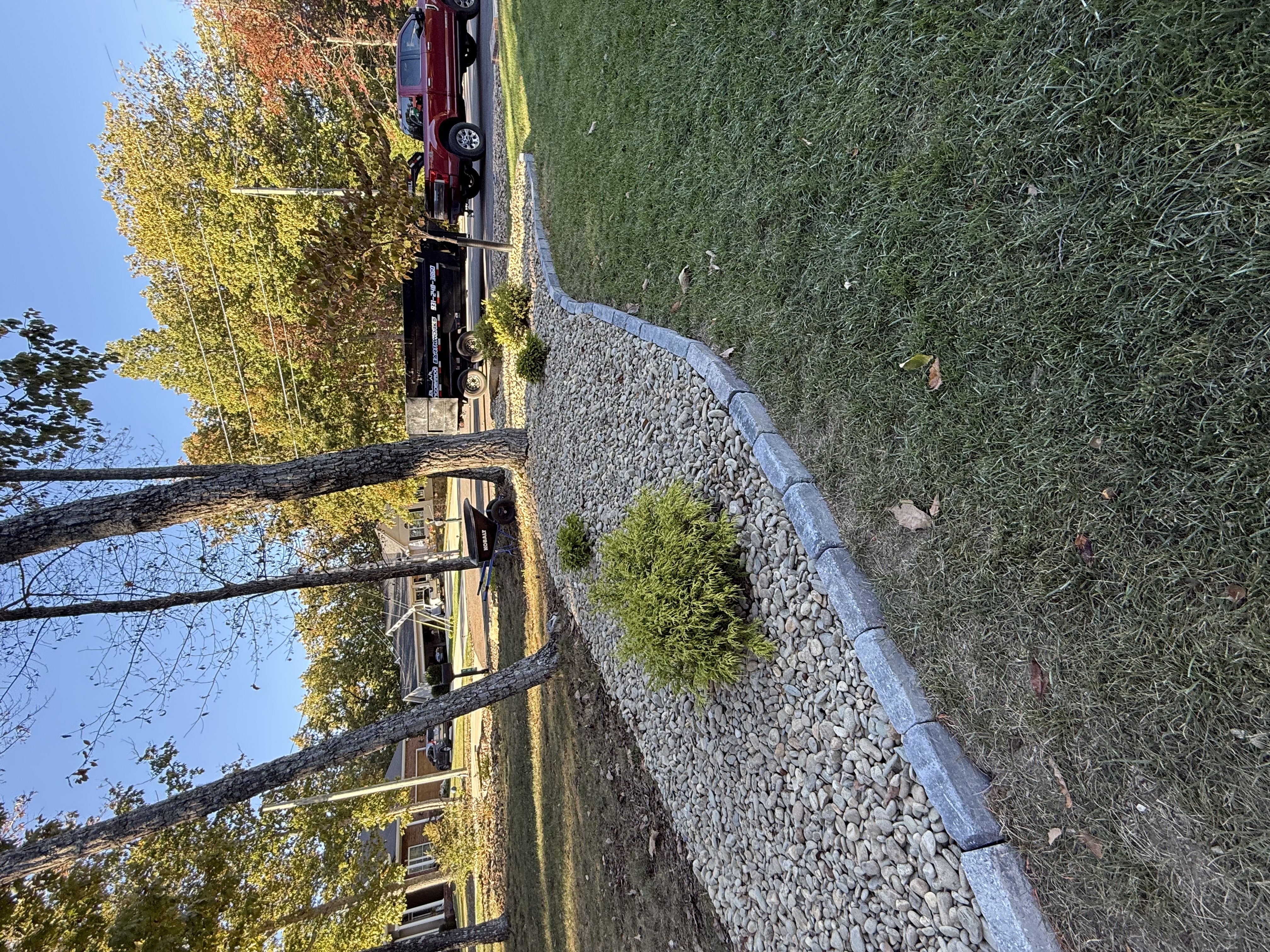
Compacted 6" Base
Geotextile separation and compacted aggregate base for paths that don’t settle.
Walkway Landscaping
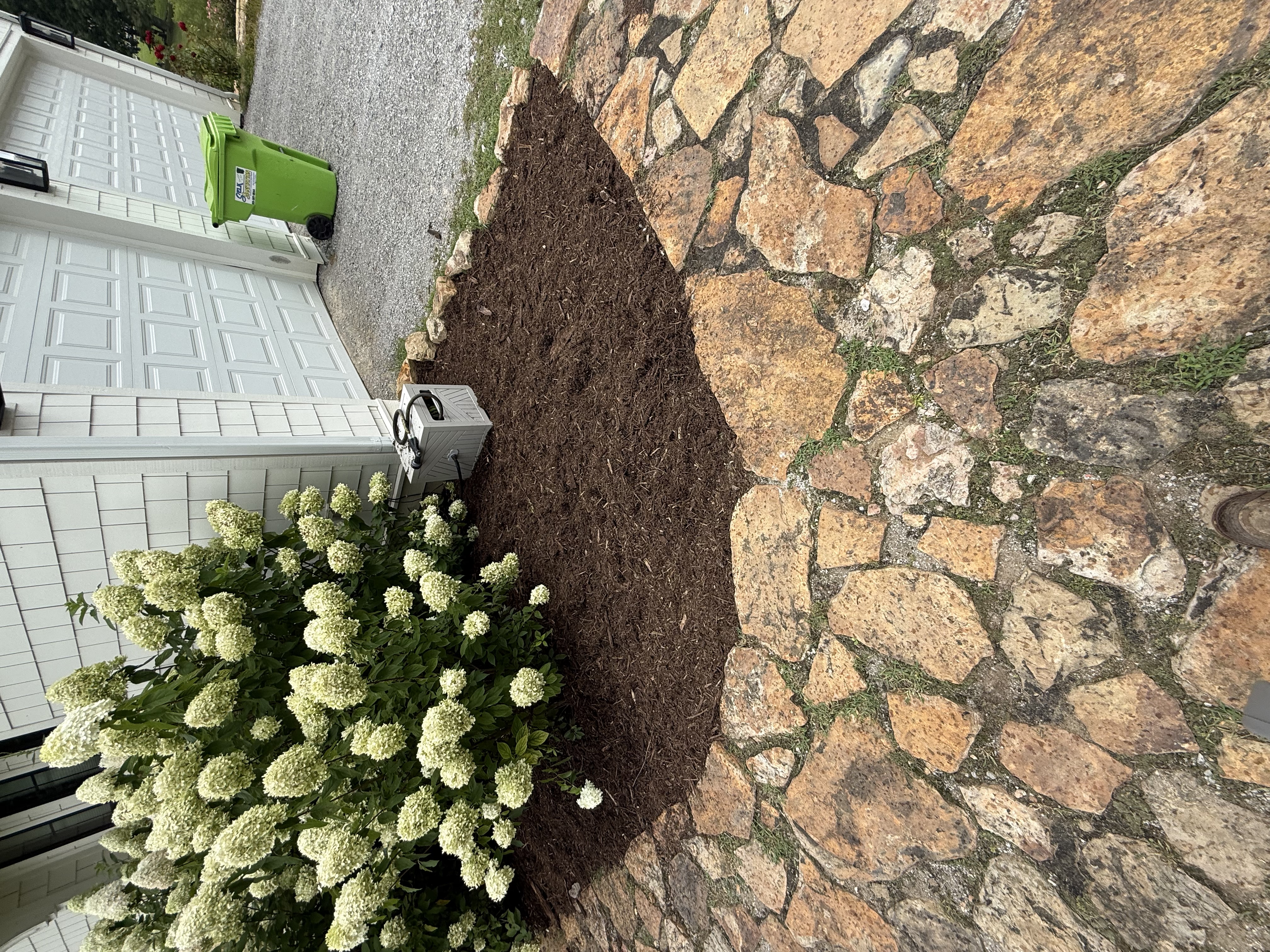
Stone walkways, stepping-stone garden paths, and ornamental edge plantings — engineered to handle daily use and timed to flower from early spring through late fall.
Overview
A walkway is more than a route between two points. It’s the pace at which a guest experiences the property. We design walkways with intentional cadence — the stride length of the stone, the rhythm of the planting bands, the moments where the path widens or curves to reveal something new.
Cut on site for natural radii — no machine-set linear edges.
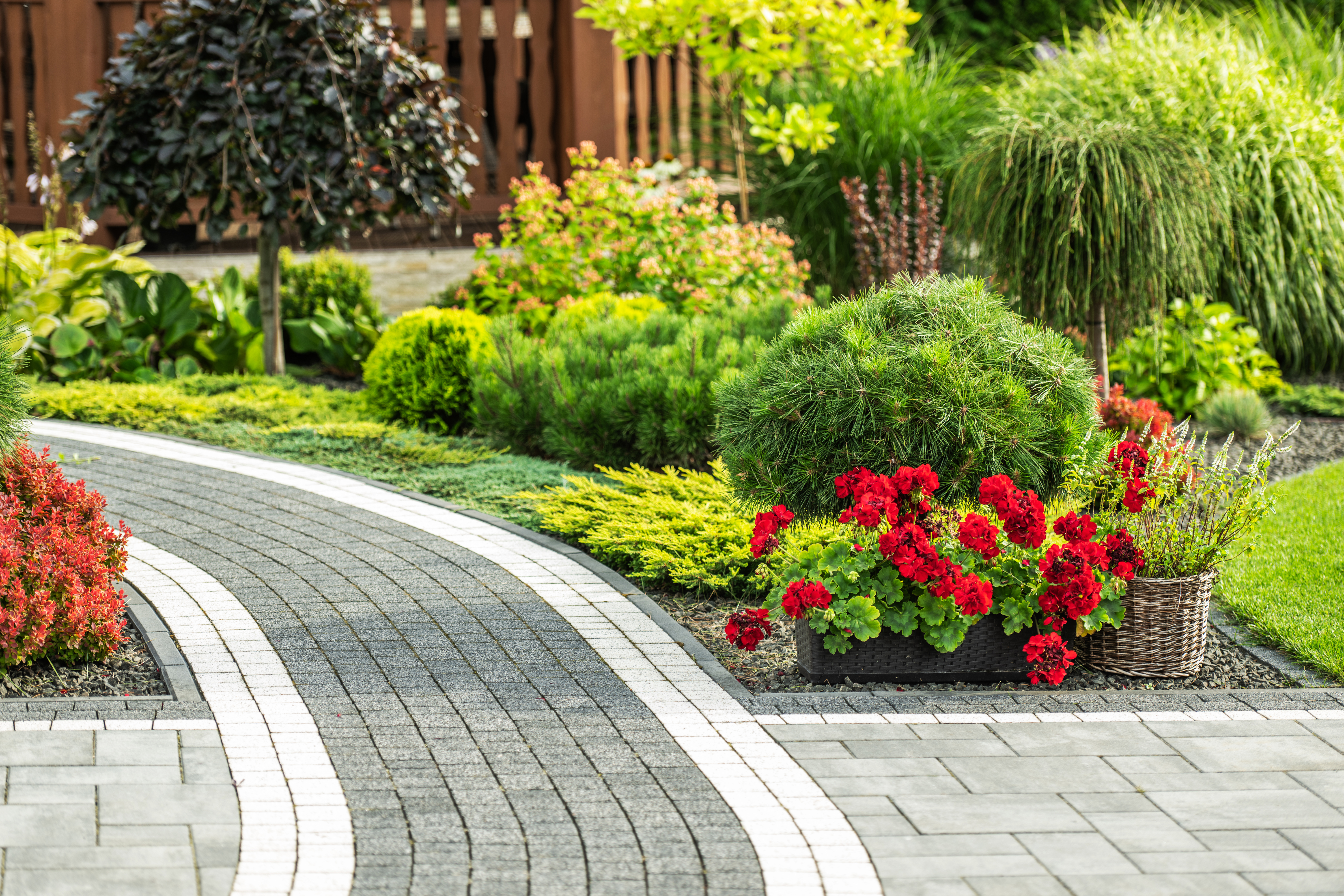
Boxwood, lavender, ornamental grasses, and perennials for sequenced bloom.
Path lights and accent uplighting integrated with the broader landscape system.
Geotextile separation and compacted aggregate base for paths that don’t settle.
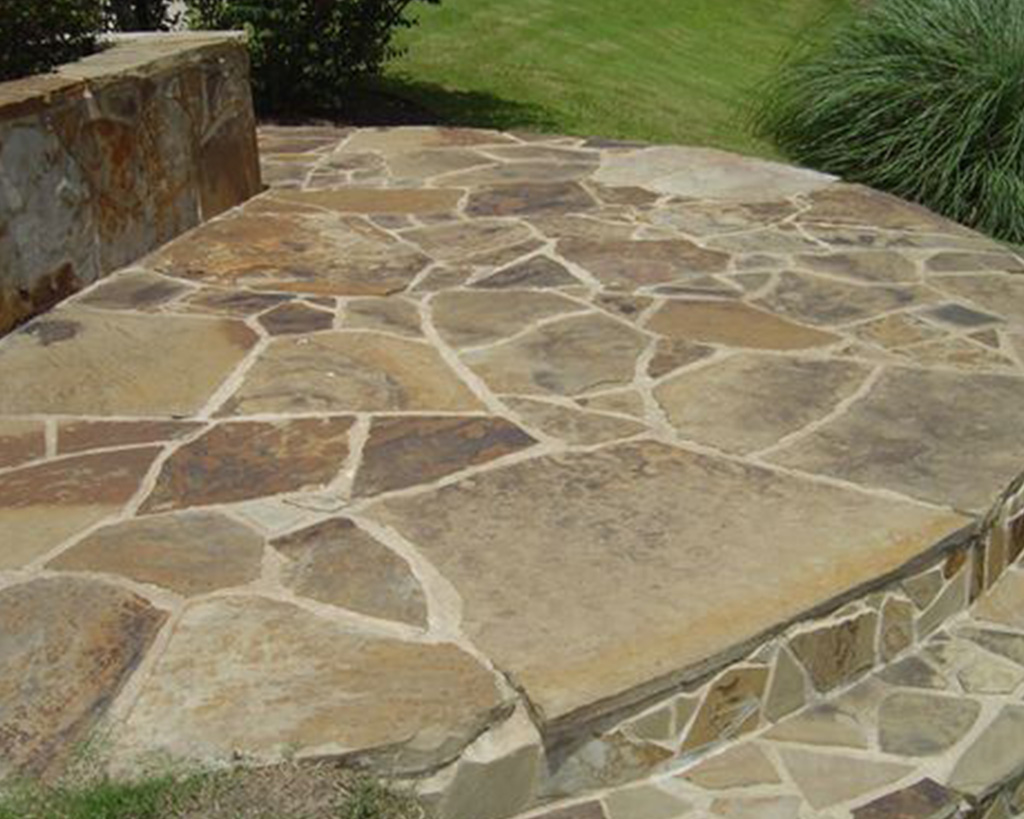
Bluestone, flagstone, or cut pavers placed on site with proper joints and pitch.
Concealed concrete or steel edging that holds the path edge for decades.
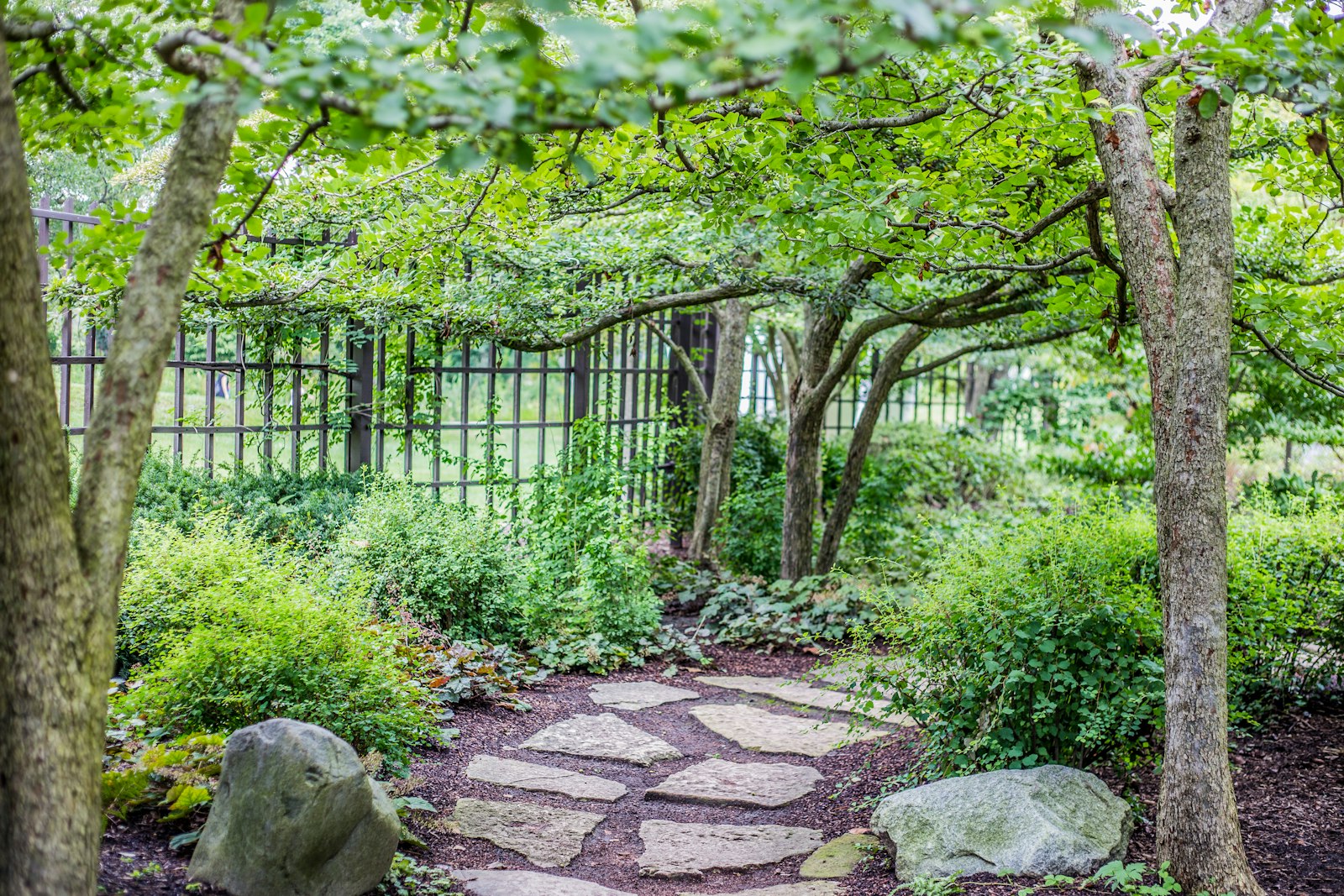
Sequenced perennials and ornamentals selected for your light and soil.
LED path lights on professional fixtures with dawn-to-dusk timer.
Surface pitch and any sub-grade drainage installed before stone goes down.
Our Approach
Mark the path on site with a hose or paint, walk the route at your normal pace, refine before excavation.
Dig to depth, lay geotextile, place 6 inches of compacted base.
Edge restraint set, stone hand-laid, LED lighting trenched in along the path.
Border plants set, mulch applied, irrigation tied in if specified.
Common Questions
For a single comfortable user, 36 inches minimum; for two abreast, 48–60 inches. Garden paths can narrow to 24 inches if intentionally meandering. We set widths to your use, not a default.
Pennsylvania bluestone in 1.5–2” thickness, flagstone in similar thickness, and granite or basalt cobble all perform 50+ years on a properly built base.
It’s optional, but for any walkway used after dark we strongly recommend LED path lighting for safety. Cost is modest if installed during the build.
Yes — pattern transitions and stone matching are part of the design. We flag any base or grade issues with existing surfaces before tying in.
A senior lead will mark the route on site and develop a fixed-price plan.