Soil Assessment
Soil type and bearing capacity evaluated before wall design.
Retaining Walls
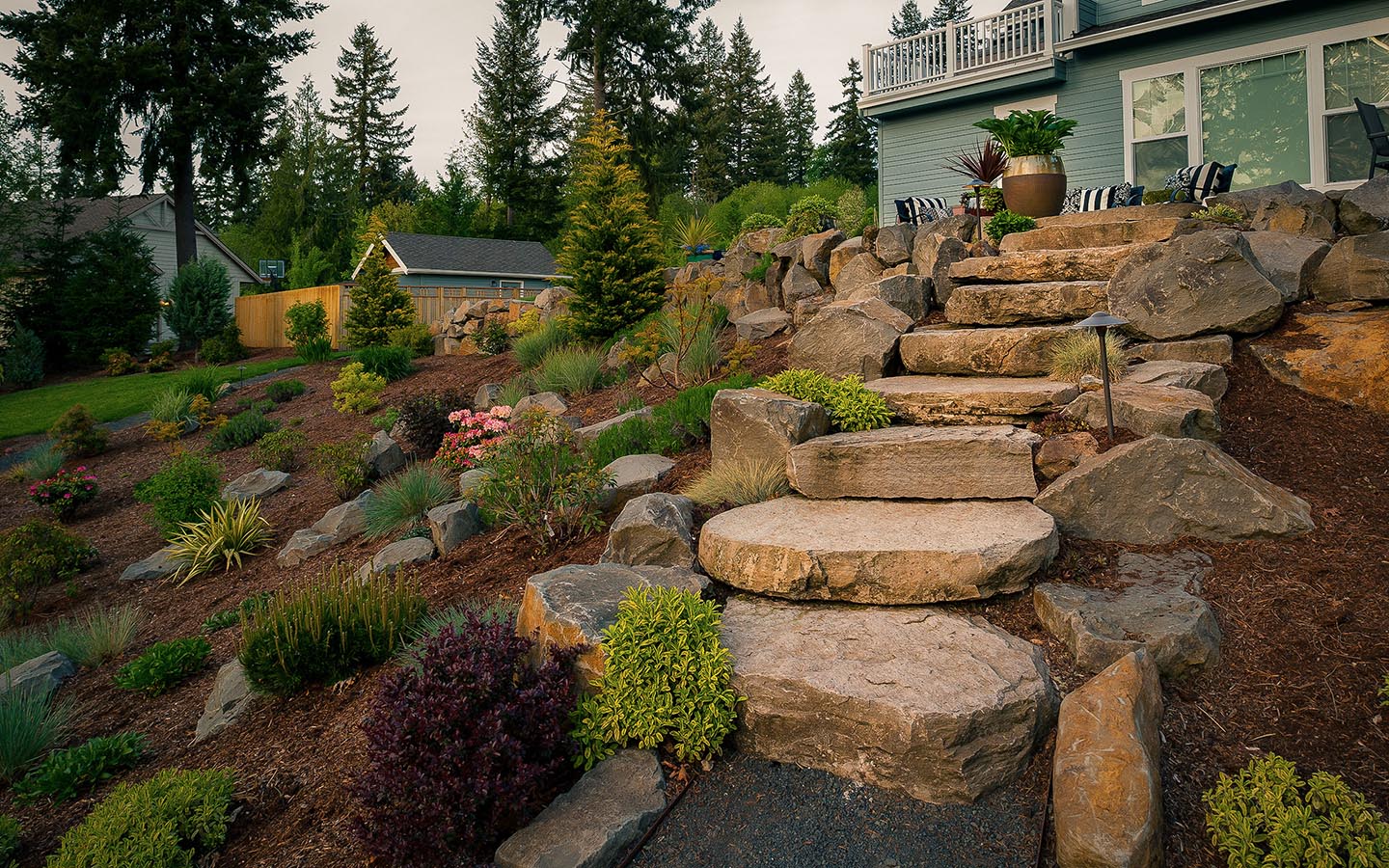
Engineered retaining walls in natural stone, manufactured block, or poured concrete — designed to soil-mechanics spec, fully drained, and footed to last decades.
Overview
Most retaining walls fail because they were built like fences. A wall holding back soil is a structural element subject to lateral earth pressure, hydrostatic load, and freeze-thaw cycles. We design to soil-mechanics spec — geogrid reinforcement, drainage behind the wall, and footings sized to the load.
Walls over 4 feet receive a sealed engineering design; below 4 feet built to standard spec.
Geogrid pulls reinforcing soil mass back from the wall face — the modern standard for tall walls.
French drain at the wall base wrapped in filter fabric prevents hydrostatic build-up.
Soil type and bearing capacity evaluated before wall design.
Concrete or compacted aggregate footings sized to wall height and soil type.
4” perforated French drain wrapped in filter fabric, daylit to grade.
Layered geogrid mats tied into the soil mass behind taller walls.
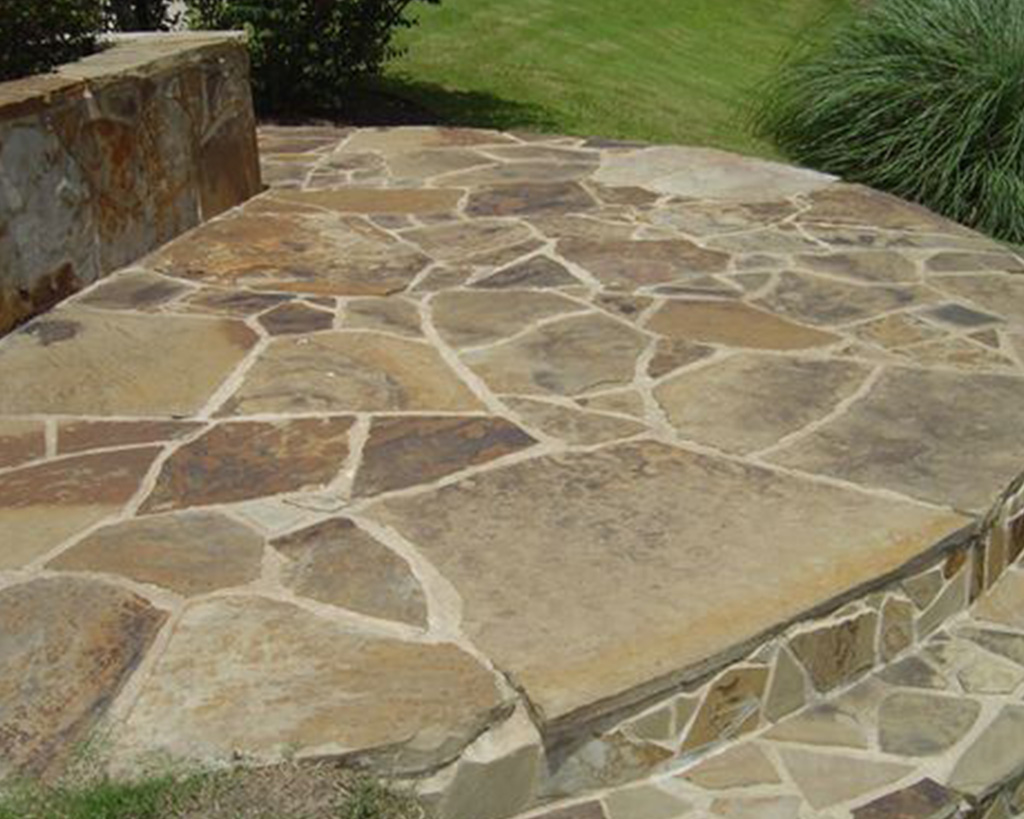
Natural stone, manufactured block, or board-formed concrete — selected to architecture.
Solid cap stone or finishing course that protects the wall and finishes the line.
Our Approach
Wall layout staked, total height calculated, soil test pit if conditions are uncertain.
Wall section, footing, drainage, and reinforcement specified — sealed engineering for walls over 4 feet.
Excavate to footing depth, prep base, pour concrete or compact aggregate footing.
Wall built course by course with drainage installed concurrently behind.
Cap stones set, backfill in lifts with compaction, drainage daylit, surface restored.
Common Questions
Practically unlimited with proper engineering. We commonly build single-tier walls to 8–10 feet and tiered systems much higher. Walls over 4 feet require sealed engineering in most jurisdictions.
Most municipalities require a permit for walls over 4 feet from grade to top. We pull all required permits as part of the project.
Three reasons: undersized footing, no drainage behind the wall, or insufficient reinforcement for the height. We engineer all three to spec.
Both have a place. Natural stone is the heritage aesthetic and tier of finish; manufactured block delivers strong engineering at lower cost. We present both with pros/cons for your design.
A senior lead will assess the slope, soil, and site conditions and propose an engineered wall.