Site Engineering
Existing grade measured, total rise calculated, step count and geometry designed to spec.
Outdoor Steps
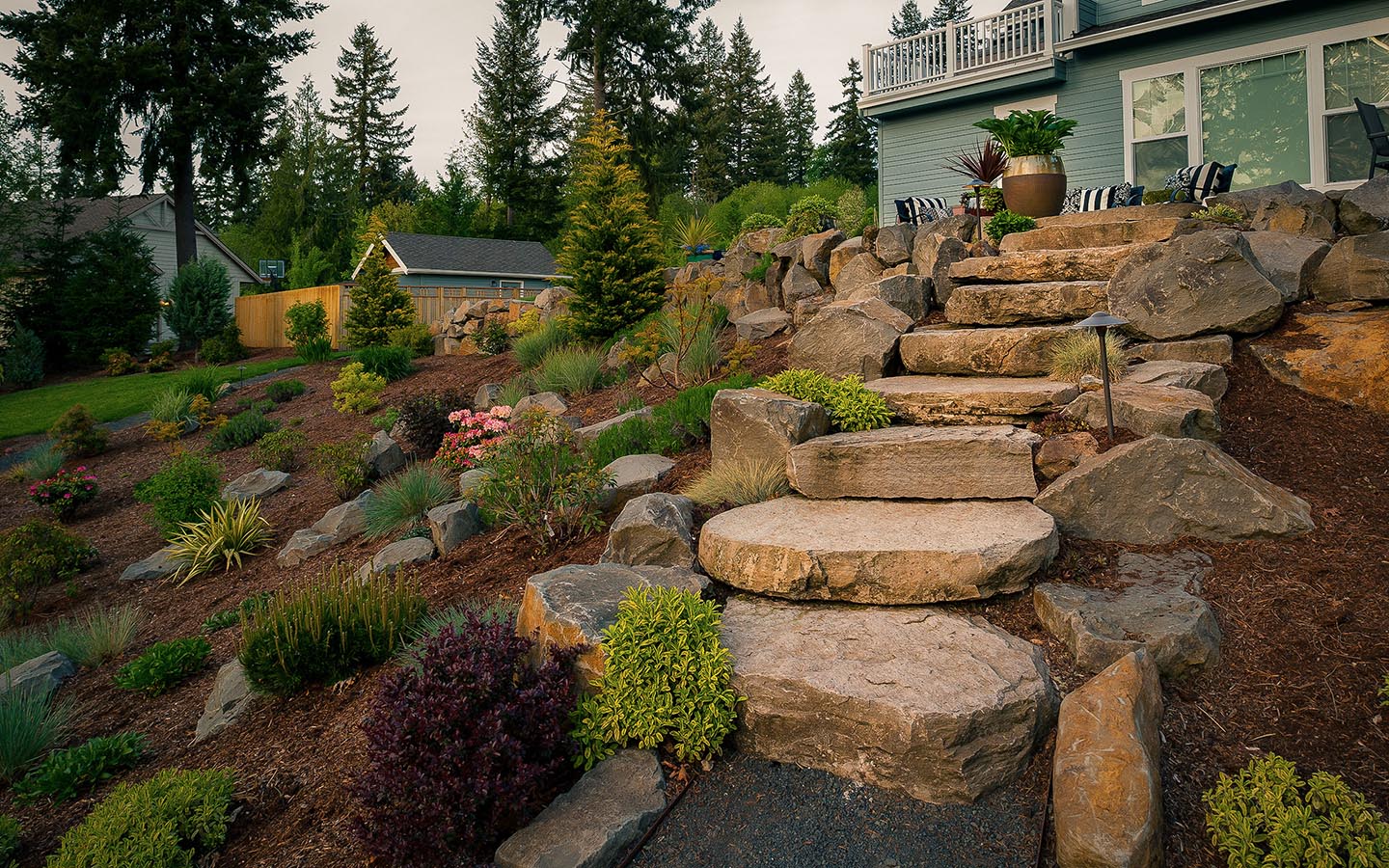
Stone, masonry, and timber stair systems engineered to code-compliant geometry — comfortable to walk, durable through freeze-thaw, and scaled to the architecture they serve.
Overview
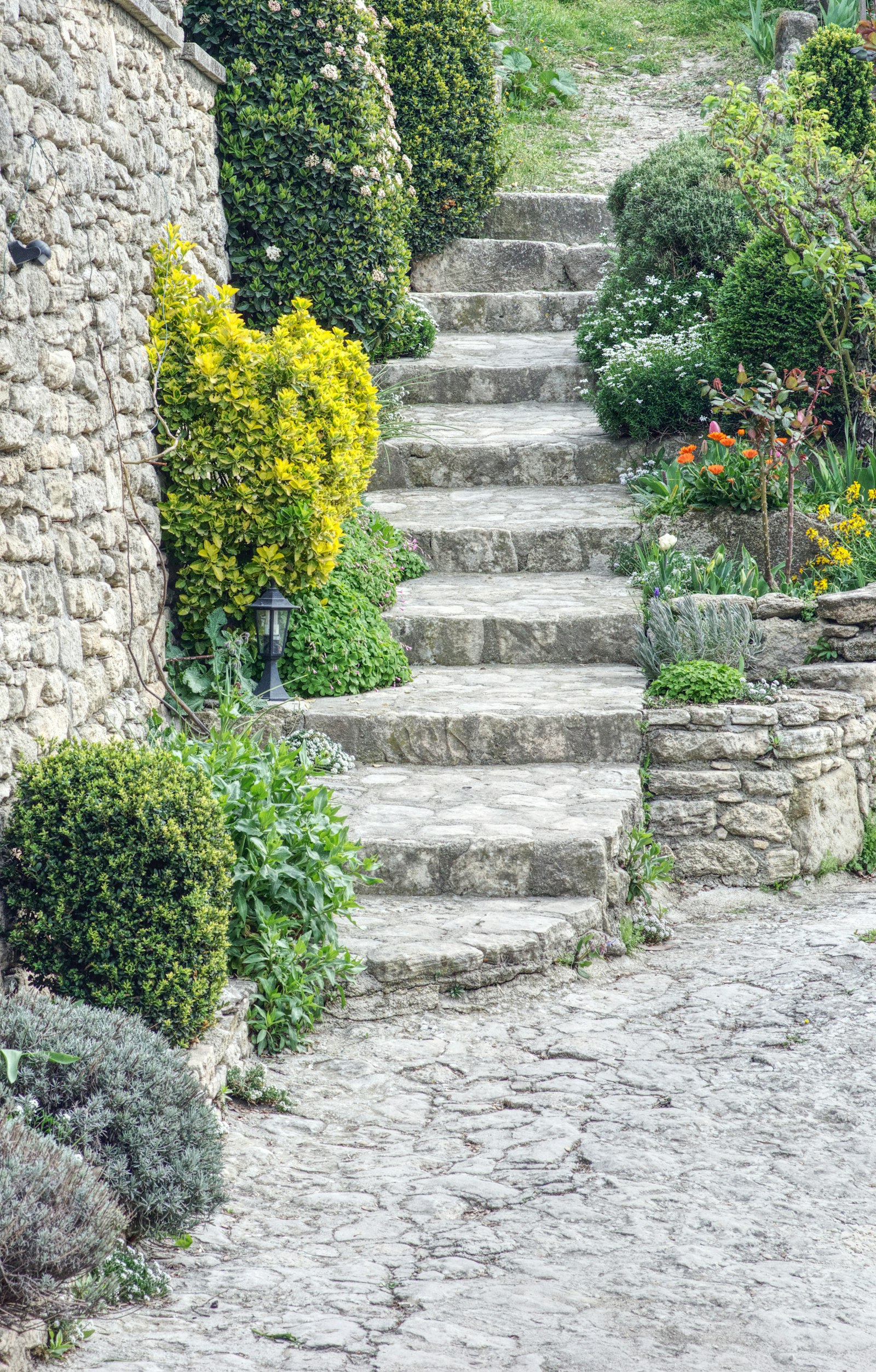
Outdoor steps that don’t feel right almost always violate stair geometry. We design and build to consistent rise and run — typically 6” rise over 14” tread for the relaxed cadence appropriate to garden steps — and footed below frost line so the stair holds shape through every freeze-thaw cycle.
Concrete footings poured to local frost depth so steps don’t shift seasonally.
Equal rise and run on every step — no half-step at the top or oddly tall first riser.
LED riser lighting integrated into the stone for safety after dark.
Existing grade measured, total rise calculated, step count and geometry designed to spec.
Concrete footings poured below frost depth — typically 36–48” in our region.
Solid bluestone or granite treads, mortared in place over reinforced cores.
Stone or block risers with optional flanking cheek walls or planters.
Surface pitch and weep paths so water doesn’t pool on or behind the stair.
Optional LED strip or riser lights on a low-voltage transformer.
Our Approach
Total rise measured, step count calculated, plan drawn for review.
Excavate to frost depth, set forms, pour and cure footings.
Cheek walls and risers built to consistent geometry, cores reinforced.
Stone treads cut and set, mortared, leveled, and pointed.
Lighting installed and tied in, surfaces cleaned, final walkthrough.
Common Questions
Almost always inconsistent rise or run. The brain catches the inch-and-a-half difference between the top step and the rest — that’s why a stair feels “off.” We rebuild to consistent geometry.
Code typically requires a railing at four or more risers. Aesthetically, even three-step transitions in steep grade benefit from a low cheek wall or rail. We design to code and good practice.
Properly footed solid-stone steps regularly perform for 50+ years. The stone is the easy part — the longevity is in the footing depth.
Yes, and we’ll spec-check the existing tie-in points before contracting. If existing footings or walls need reinforcement, we’ll flag it up front.
A senior lead will measure the grade transition and propose a fixed-price stair plan.